

The consumption of cannabis has also been widespread both medically and recreationally.
With the evolution of laws and acceptance by society, more and more people become interested in what happens to them when they take it. The most contradictory ideas may be expressed, some even saying that it is the miracle that will cure everything and others that it may cause serious health problems. The whole issue is found somewhere in the middle of the truth, which is rooted in biological science. According to a top-notch medical marijuana clinic, you should discuss with a doctor before using medical marijuana. For example, in Florida, you are allowed to use medical marijuana once a doctor checks your eligibility condition.
To know how cannabis affects the body biologically, it is necessary to consider the interaction of the active compounds with human anatomy. It is not that when you smoke, vape or eat a cannabis product it will simply feel you a certain way. It is an active receptor that attaches to a network of receptors that are distributed in your immune system and nervous system.
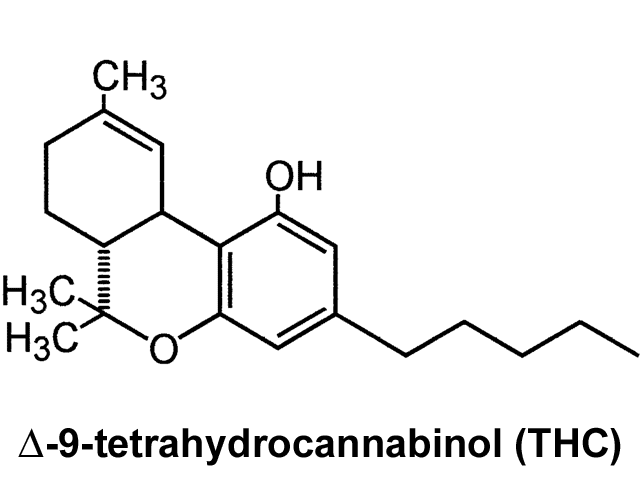
The Cannabis Science: THC and CBD.
The effects of marijuana can only be understood in relation to cannabinoids. These are the chemical elements present in the cannabis plant. They are tetrahydrocannabinol (THC) and cannabidiol (CBD) which are the most known.
The psychoactive constituent that makes it addictive to marijuana use is called THC, which produces the high that the drug is known to give. It is a drug that directly attaches to receptors in the brain and changes your mood, perception, and cognition. CBD, in its turn, is not psychoactive. It combines in various ways with the body and is commonly investigated with regard to its possible therapeutic effects, including the reduction of inflammation or anxiety.
The two compounds have an interaction with your endocannabinoid system. The system is important in the control of sleep, appetite, pain sensation and mood. And when you use marijuana you are effectively introducing foreign chemicals that replicate your bodily natural signaling molecules.
Marijuana has short-term effects that are as follows.
The short-term effects of marijuana are experienced within a few seconds with smoked or vaped or within a few hours when taken as an edible. These immediate responses are diverse, based on the strain used, the route of consumption as well as your tolerance.
Impact on the Mind
The psychoactive effects of marijuana are commonly used by the majority of people. When THC in the brain is received, it causes the release of dopamine. This gives one a euphoric and relaxing effect. You may find that there is more brightness in colors, more clarity in sounds and that time is slowing down.
Nevertheless, it is not necessarily positive on the mental level. large amounts of THC may over stimulate the brain. The effects of this overstimulation may be anxiety, paranoia or panic. There is also the occasional memory loss in some users which might result in forgetting of the last events or not being able to concentrate on performing a certain task.
Impact on the Body
There are also several physical effects brought about by marijuana. An elevated heart rate is one of the most frequent ones. Even just a few minutes after smoking cannabis, your heart rate may skyrocket, and this may not be a comfortable experience when one has an existing heart problem.
There will also be changes in blood pressure which will result in the typical symptom of bloodshot eyes as blood vessels widen. Salivary production diminishes leading to dry mouth which is commonly known as cottonmouth. What is more, THC activates the appetite section of the brain. This leads to a strong sense of hunger, and it is accredited by all as the munchies. Lastly, marijuana may compromise the ability to drive and respond fast, hence driving under the influence is extremely risky.
Marijuana has long term effects.
Although the short time effects may fade away in a couple of hours, everyone can change permanently when marijuana is used constantly and intensively. Health professionals have identified a number of long-term risks although research is still going on.
Cognitive Behavior and Brain Health.
The development of the brain goes on till one is in mid-20s. The excessive marijuana consumption in adolescence can change this growth. Research has indicated that adolescents with a habit of consuming cannabis could lose their IQ, memory, and learning abilities.
In the case of adults, the long-term cognitive consequences are less evident, although chronic use is related to problems in sustaining attention and recollection. Some cognitive functions might regenerate when the person quits taking marijuana, but other alterations might be irreversible based on the age at which the individual started taking marijuana, and the regularity of taking this drug.
Pulmonary and Cardiovascular dangers.
The way you use marijuana is very significant to your physical wellbeing in the long term. The use of cannabis entails the use of burnt plants. Just like tobacco smoke, marijuana smoke also has toxins and carcinogens. Smokers can acquire cough, bronchitis, and increased vulnerability to lung infections which are chronic.
The cardiovascular system is also put to the test. Repeated stress of a higher heart rate and blood pressure changes may cause future heart related problems. This is of special concern to old people or those who have a history of cardiovascular disease.
Mental Health Connections
Marijuana and mental health have a very complicated relationship. Some individuals use it to overcome anxiety or stress but excessive use may actually deteriorate some psychiatric disorders. It has been documented that high-potency use of THC prompts the development of schizophrenia to people with genetic inclinations towards the disease.
Moreover, it may cause Cannabis Use Disorder (CUD) with frequent usage. It is one of the types of dependencies when an individual is not able to control his or her marijuana consumption even when it leads to issues in everyday life. Quitting can be difficult with withdrawal symptoms which include irritability, insomnia and lack of appetite.